Frequently Asked Questions About Chimney Flashing and Leak Repair in Houston
Real, straightforward answers about chimney crickets, code requirements, chase cap repairs, and flashing costs from our local roofing crew.
What is the difference between step flashing and counter-flashing?
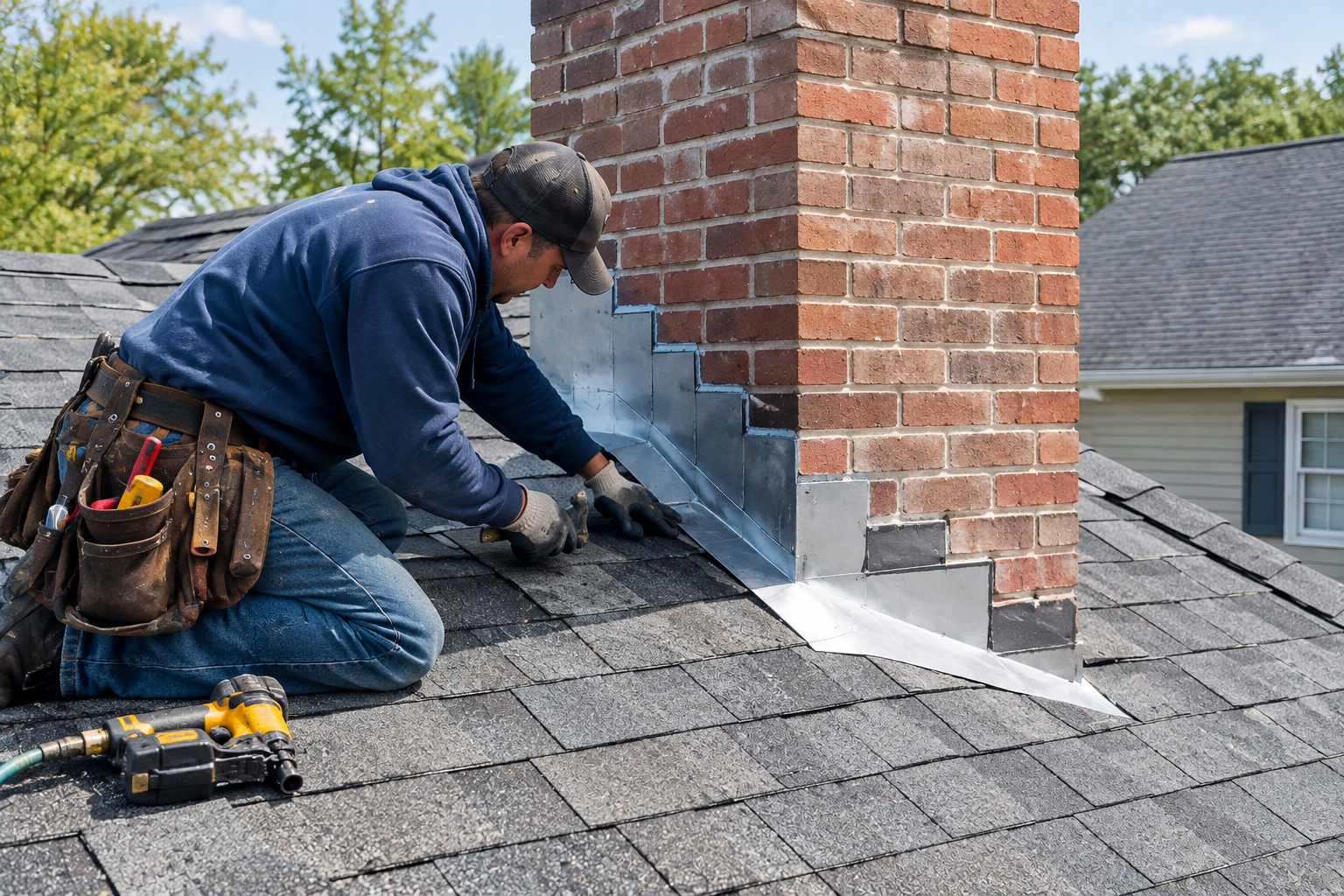
Step flashing consists of individual L-shaped metal cards woven directly into each course of shingles to catch water running down the roof slope. Counter-flashing is the metal piece anchored directly into the chimney wall that hangs down over the top of the step flashing. Because your chimney and your roof settle and move at slightly different rates, this two-piece sliding system keeps water out without tearing or buckling the metal.
Does the City of Houston building code require a chimney cricket?
Yes. Under the building code enforced across Houston, any chimney wider than 30 inches perpendicular to the roof slope must have a cricket (a small pitched roof saddle) built behind it. Without one, storm runoff, pine needles, and live oak leaves pile up behind the chimney like a dam, forcing sitting water backward beneath your shingles.
Can you fix my leaking chimney if it is wrapped in wood siding instead of brick?
Yes. Sided chimneys usually leak because the builder installed a flat galvanized sheet metal cap that has rusted through, or water is seeping behind the corner trim. We custom-bend rust-proof stainless steel chase covers that shed water outward, replace rotted framing studs inside the chase, and re-side the exterior with rot-proof James Hardie fiber cement.
Why does my fireplace smell damp and musty after it rains?
That musty odor means water is actively soaking into your chimney structure. It usually points to a rusted-out chase pan, a cracked mortar crown at the very top, or failing metal at the roofline. When rainwater mixes with soot, ash, and damp insulation inside the chase, that smell pulls straight down into your living room.
How do I know if my chimney leak is coming from the roof flashing or the chimney cap?
Pay attention to where the water shows up first. If water is dripping directly inside your fireplace firebox or rusting the damper, it usually means the metal chase cap, spark arrestor, or concrete crown at the very top has failed. If the water creates brown stains on the ceiling drywall or walls a few feet away from the chimney, water is almost certainly getting in around the roofline step flashing or counter-flashing.
How much does a chimney flashing repair typically cost in Houston?
For a straightforward repair on a brick chimney—such as grinding out old cracked caulk, cutting a fresh reglet groove into the mortar, and installing new metal counter-flashing—costs generally run between $450 and $950. If the leak has rotted the wood decking underneath, or if we need to tear off surrounding shingles to rebuild an entire step-flashing system with a new wood cricket, jobs typically range from $1,200 to $2,800+ depending on the chimney's size, pitch, and framing damage.
Not sure where the water is getting in around your chimney?
Call Standard Roofing at (713) 347-3802. We will climb up, take clear photos of your flashing, cap, and brickwork, and give you an honest plan to fix it right.